
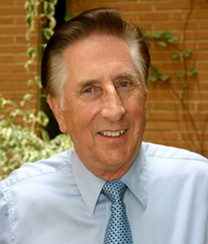
Antony Orme
Faculty Member From: 1968 – 2010
Antony Orme was a dedicated geomorphologist, whose research focused on a variety of geographical systems, from the mountains to the sea. He taught in the geography department at UCLA from 1968 to 2010 and served as department chair from 1974 to 1977. He was dean of social sciences from 1977 to 1983. Orme was also keenly interested in the history of geology and geomorphology, which the study of landforms, their processes, form and sediments at the surface of the Earth, and published scholarly pieces on that topic.
He also was a gifted cartographer and scientific illustrator who could visually bring to life the objects of his study. During his career, Orme was honored with awards including Honorary Life Member and Honorary Fellow of the British Society for Geomorphology, Founders’ Medal and Frost Lecturer, British Geomorphological Research Group, Mel Marcus Distinguished Career Award from the AAG Geomorphology Specialty Group, and the UCLA Edward A. Dickson Emeriti Professorship Award. Orme’s greatest contributions were as an inspiring teacher and mentor of graduate students. During his career at UCLA, he supervised more than 20 doctoral dissertations. Students and faculty in the department remember his geological and geomorphological knowledge as encyclopedic and his enthusiasm infectious.
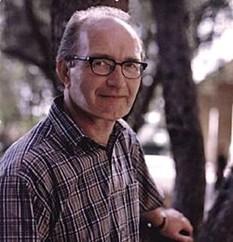
Denis Cosgrove
Faculty Member From: 2000 – 2008
Cosgrove was born in Liverpool, England, in 1948. He attended Saint Catherine’s College in Oxford University for his undergraduate degree. He received a master’s degree from the University of Toronto and then went back to Oxford for his doctorate. Cosgrove received his first official appointment from Oxford Polytechnic in 1972. In 1980, he began at Loughborough University. His career took off, and in 1994, he accepted the position of Professor in Human Geography at Royal Holloway, University of London. Geography was a lifelong passion for Cosgrove, one he was eager to share with his students. Goza said he told stories to the class about being interested in geography as a child.
As the inaugural Alexander von Humboldt Chair of Geography, Cosgrove was able to share this passion with students. Christine Danner, a first-year geography and environmental science student, said Cosgrove was an engaging lecturer. “His enthusiasm for the class really captured our attention. He just really helped connect the subject to us,” Danner said Goza said Cosgrove’s desire to teach was evident in his lectures. “He was a really good professor who put a lot of time into his lectures and his assignments. He cared about student learning and he was really interactive with students during lecture,” Goza said. During his prolific career in his field, Cosgrove wrote or edited 11 books and wrote more than 80 research articles, and “a huge volume of commentaries, reviews, reports and related academic papers,” according to the department’s Web site.
“His knowledge was always easily accessible, he was always engaging, always willing to talk to you and to get involved in whatever project you had in mind,” Puleo said. Puleo said Cosgrove is remembered for his warm personality as much as his accomplishments in academia. “Such a kindness and generosity of spirit, you never felt that he was anything except 100 percent behind what you wanted to do,” Puleo said. “(He was a) really engaging, energetic, kind man who is absolutely irreplaceable.”
Gerry Hale
Faculty Member From: 1965 – 1994
Ph.D., University of California, Los Angeles. 1966: Associate Professor. Marxian Cultural Geography, North Africa and the Middle East. Current research on cultural concepts for Marxian Geography, geography of capitalist culture. geography of cultural domination, especially ideology, state apparatus. cultural hegemony, and peripheral underdevelopment in Northeast Africa. especially Sudan.
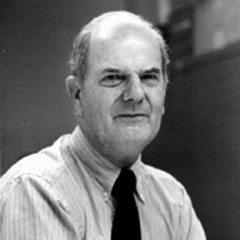
Norman Thrower
Faculty Member From: 1957 – 1990
Norman Thrower, a leader in the interconnected fields of geography and cartography and professor emeritus of geography at UCLA. Among the many organizations to which Thrower belonged was the California Map Society, for which he served as the group’s inaugural president. He produced numerous publications, notably “Man’s Domain: A Thematic Atlas of the World, 1968” and “Maps and Civilization: Cartography in Culture and Society, 1996.” Thrower joined UCLA in 1957 after earning a doctorate in geography and minor in the history of science from the University of Wisconsin. From 1980 through 1987 he served as director of the UCLA William Andrews Clark Memorial Library and from 1984–1987 he served as acting director of UCLA’s Center for Seventeenth-and Eighteenth Century Studies.
Retirement from teaching in 1990 didn’t slow down his passion for sharing and understanding the world by way of its topography and the humans who navigate it. In 1996, Thrower received the Constantine Panunzio Award for being the most productive emeritus professor among the entire University of California system.
His art skills made him a prime candidate to join the Survey of India, where he trained as a cartographer and honed his abilities by making topographic maps to support the war effort. After the war he returned to England where he made maps for the Directorate of Colonial Surveys. It was there he met his wife, Betty, who was stationed in England with the U.S. Army Nurse Corps. They married in England in 1947 and moved to the United States the same year. Norman received his bachelor’s in geography from the University of Virginia in 1953.
Thrower was a sought-after curator of events and programs related to the history of world travel.
In 1975, he was appointed by California Gov. Ronald Reagan to the Sir Frances Drake Commission to make preparations for the 400th celebration of Drake’s circumnavigation of the Earth. He met Queen Elizabeth II, Prime Minister Edward Heath and other dignitaries. From 1989–1993 he served as head of the Columbus Quintenary programs. In this position Thrower met with Queen Sophia of Spain and received an award from King Juan Carlos I for service to the country.
Jonathan Sauer
Faculty Member From: 1967 – 1989
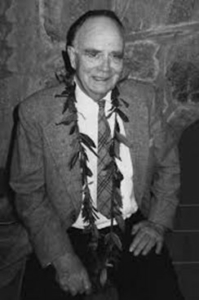
Jonathan Deininger Sauer was born in Ann Arbor, Michigan on July 16, 1918 to Lorena S. Sauer and Carl O. Sauer, then a professor at the University of Michigan. Five years later, the Sauer family moved to Berkeley where Jonathan attended local schools and then went to the University of California from which he graduated in 1939 with a B.A. and honors in history. After UC Berkeley he entered the graduate program in geography at the University of Wisconsin in Madison.
With World War II in full swing, Jonathan suspended his graduate work when he was drafted into the U.S. Army Air Forces and he became a weather specialist in the Pentagon. It was in Washington that he met Hilda Sievers, herself stationed at the Pentagon as a member of the Women’s Army Corps. They married in 1946. Jonathan resumed graduate work, but this time in St. Louis in order to study with Edgar Anderson (1897-1969), a brilliant geneticist with broad interests (Anderson 1952). The Henry Shaw School of Botany at Washington University was housed at the Missouri Botanical Garden, then as now, one of the major world centers for plant taxonomy. Anderson had gone to Berkeley in 1943 on a Guggenheim Fellowship and there he and Carl Sauer became good friends. That contact explains how J. Sauer met Anderson and why he wanted to study with him. In letters to Carl Sauer, Anderson described Jonathan as an exemplary graduate student. Within four years J. Sauer finished his dissertation on the grain amaranths and almost simultaneously published on it (Sauer 1950). He later reassessed the taxonomy and distribution of amaranths and in the process concluded that the transfer of the domesticated species from the New World to the Old was clearly post-Columbian (Sauer 1967b).
In 1950 Jonathan Sauer moved to Madison, this time as an instructor in the University of Wisconsin’s Department of Botany where he pursued a research and teaching program around plant taxonomy, plant geography, economic botany and plant evolution. He spent the year 1955-56 at the University of Michigan. In 1959 the Geography Department on the Madison campus invited him to accept a joint appointment. Among its faculty at the time were Glenn Trewartha, with whom Sauer studied weather and climate before the war, and Andrew Clark (then chair) and Frederick Simoons, both of whom had Jonathan’s father as their mentor at Berkeley. The short walk between Birge Hall and Science Hall gave Sauer some breathing space from the fractious Botany Department, then split between the molecular scientists and those on the “natural history” side whose research did not involve replicable experimentation. The plethora of faculty positions in the 1960s made professors a mobile lot. In 1967 J. Sauer was a visiting professor at LSU in Baton Rouge and in that same year UCLA invited Sauer to join its Geography Department as a professor of geography. Its staff included two senior professors, Joseph Spencer and Henry Bruman, whose mentor had been Jonathan’s father. Biogeography had recently been established as one of the UCLA department’s main research and teaching clusters. Over the next 21 years, 15 of J. Sauer’s students received their Ph.D. degrees, most of whom worked on a plant geography question related to southern California (Figure 1). From 1974 to 1981 he was Director of the UCLA Herbarium and the Mildred E. Mathias Botanical Gardens on the UCLA campus. He retired in 1988 and continued to live in Pacific Palisades until his death.
Werner Terjung
Faculty Member From: 1966 – 1988
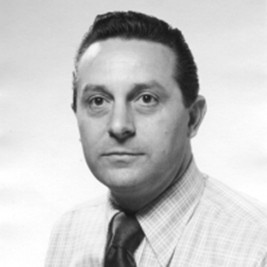
Ph.D., University of California, Los Angeles, 1966: Professor. Climatology, with emphasis on physical concepts and processes and on research methods, including numerical modeling and computer programming. Current research on models in biophysical ecology, especially aspects of regional food production, and urban climates.
Henry J. Bruman
Faculty Member From: 1945 – 1982
With the passing of Henry John Bruman, UCLA lost a distinguished faculty member and philanthropist. Born in Berlin, Germany, he came to Los Angeles with his mother when he was eight years old. Henry Bruman’s formal education, at all levels, was in California. He graduated from Los Angeles Manual Arts High School in 1930, and attended California Institute of Technology for one year before transferring to UCLA. His first degree, in 1935, was in chemistry, but after spending a summer in Mexico he turned his attention to geography, in which subject he earned a second bachelor’s degree at UCLA. He was to combine these interests in his dissertation “Aboriginal drink areas in New Spain,” written under the supervision of Professor Carl O. Sauer at UC Berkeley, where Bruman received his Ph.D. in geography in 1940.
Throughout his career Henry taught courses on Latin America, based on extensive field work, to generations of admiring students. He combined this with service to UCLA’s Center for Latin American Studies. He had a profound interest in the life and work of the German naturalist Humboldt, whose career and interests closely matched his own. Appropriately, Bruman received the Alexander von Humboldt Gold Medal from the Federal Republic of Germany as being “the most prominent American scholar of Humboldt,” to quote German Consul General to Los Angeles, Wilhelm Fabricius. From 1957 to 1962 Henry Bruman was chair of the Department of Geography at UCLA. It was a time of great expansion in faculty, resources, and buildings. His most important administrative achievement, with the help of a succession of University Librarians, was in the founding of UCLA’s Map and Government Information Library. This facility, one of the best such units on any campus in the United States, now bears the name of Henry J. Bruman.
Perhaps the most rewarding personal accomplishment of Henry Bruman was his return to his native Germany as Director of the University of California Study Center at the Georg-August Universität, Göttingen, 1966-1968. He was honored by being a regular Professor there while serving as Director, not always the case. He is well remembered by students at Göttingen by having a grove of California redwood trees planted on the campus. Henry’s last important overseas appointment was a Fullbright Fellowship in Portugal. He established the Henry J. Bruman Educational Foundation to dispose of his fortune in an orderly manner. His benefactions, all to UCLA, include: The Alexander von Humboldt Chair in Cultural Geography, The Henry J. Bruman Chair in German History, and large grants to the UCLA Library. Other benefactions at UCLA are to the German Department, Chemistry Department, Fowler Museum, and Clark Library. Recalling his impoverished student days and financial aid he had received, he endowed student fellowships; and reflecting his personal taste, Bruman endowed an ongoing chamber music series at UCLA.